
  |
|
March 30, 2023 |
 With the traditional ringing of the bell we bring this meeting to order!
Club member's attendance is recorded by logging in.
Visiting Rotarians may complete a makeup form at the end of this meeting; YOUR donation for making up with us helps fund our service projects!
Visitors are always welcome to browse and register without obligation.
Our club offers the flexibility of ROTARY ON YOUR TIME!
and an opportunity to remain connected with Rotary!

Welcome to this week’s meeting of the eClub of the State of Jefferson.
I am Bob Gibson, President of the Rotary eClub of State of Jefferson. Welcome to this week’s meeting. I hope this finds you well.
I had the opportunity to attend the District Assembly in Cottage Grove last Saturday. It was a good day of meetings with other Club Presidents and President-elects. The discussions included administrative issues like risk management, membership and budget. We received information on managing the Club Constitution and Bylaws. These club elements are necessary for the function of a Rotary Club. And, they are not sufficient. Rotary gives us the opportunity for “Service.” I believe it is the Service and the Fellowship that we experience in that service that is the essence of Rotary. Whether we are putting together details of a project for the Navajo Nation or considering a proposal for supporting the eClub of Ukraine, we have opportunities that are unique to Rotary.
Thank you for your interest in our Club and your commitment to “Service above Self.”
Enjoy the meeting.
If you have any questions or comments, I am available. My e-mail address is: bob@bluewaterphoto.net.
email president@StateOfJeffersonRotary.org

You can see five planets align in the sky this week.
Venus, Mars, Jupiter, Mercury, and Uranus will form an arch immediately after sunset. This happens every time the planets line up on one side of the sun — about once a year.
Four of the five planets should be visible with the naked eye beneath the moon. But if you want to see Uranus, use binoculars or a telescope.
DISTRICT GRANTS JOIN US VIA ZOOM April 15th
9am-11am
FOR REQUIRED TRAINING FOR DISTRICT GRANTS
Club qualification for 23-24 district grant participation includes the grant writer attending this 2-hr required training session. All Rotarians are invited to learn about changes to policies for district grants for the new Rotary year. Representatives from DACdb join us to provide instructions on how to use DACdb grant module successfully.
DRFC committee members will review policies and procedures for district grants and answer your questions. This is a great opportunity to refresh your skills as well as train others in your club in grant writing.
REGISTRATION IS POSTED ON THE DACdb CALENDAR
District Conference, May 6-7, 2023
March is Water and Sanitation Month

Clean water, sanitation, and hygiene education are basic necessities for a healthy environment and a productive life.
When people have access to clean water and sanitation, waterborne diseases decrease, children stay healthier and attend school more regularly, and mothers can spend less time carrying water and more time helping their families.
How Rotary makes help happen
Through water, sanitation, and hygiene (WASH) programs, Rotary’s people of action mobilize resources, form partnerships, and invest in infrastructure and training that yield long-term change.
The Rotary Foundation is changing the world by providing grants for projects and activities around the globe and in your own backyard:
WASH Global Grant Projects: Since 2013, The Rotary Foundation has invested in more than $130 million in over 2000 projects worldwide. Through this investment, our volunteers of action have improved access to safely managed and basic WASH services to communities, schools and healthcare facilities, while protecting and conserving water resources.
Rotary-USAID WASH Partnership: Rotary and the United States Agency for International Development (USAID) assist communities and governments to plan, finance and deliver safe water, sanitation and hygiene services, while sustainably managing water resources.
WASH in Schools Target Challenge: Rotary challenges our members to develop sustainable projects that comprehensively address the most pressing water, sanitation, hygiene and education needs in Belize, Guatemala, Honduras, India, and Kenya.

Women make up two-thirds of Pakistan’s polio workforce. It is a role born of necessity, as cultural norms prevent men from entering many people’s homes in Pakistan. Women can build mom-to-mom relationships and provide trusted advice, not only about polio, but about other health issues. Photography by Khaula Jamil and Sana Ullah Women make up two-thirds of Pakistan’s polio workforce. It’s a startling statistic for a nation that ranks 145th out of 146 countries for gender parity in economic participation and opportunity, according to a World Economic Forum gender inequality index. The role of female vaccinators is born of necessity. Because of cultural norms, men are not allowed into many people’s homes in Pakistan. Women who provide the health care are the key link. They can build mom-to-mom relationships and provide trusted advice on not only polio but other health issues. “Women working with women on the front line is going to be what gets us across the finish line,” says Rotary President Jennifer Jones, who met last year with polio workers in Pakistan. The country and Afghanistan are the only two where wild poliovirus is still transmitted persistently. The female vaccinators’ work is neither safe nor easy. The women in Pakistan are sworn at, shoved, beaten, and some even killed. They’re fighting misinformation. But their work is crucial — and not just for the cause of polio eradication. “They are supporting their education, they’re supporting their household, they’re supporting their men and giving a change in Pakistan,” says Sadia Shakeel, coordinator for a Rotary-supported polio resource center in Karachi. “This is bigger than polio.” Shakeel calls them “little entrepreneurs.” Most of the women range in age from 21-38 and have their own children, she says. Yet they wake to say prayers before dawn, feed their children breakfast, and leave to start their work to end a disease. Employing women is one key strategy of the Global Polio Eradication Initiative. And that’s not just to deliver the vaccines at the front line; it’s also to hire women as supervisors, doctors, and decision-makers. “We cannot succeed without the women we have in the program at all levels,” says Hamid Jafari, a pediatric infectious disease doctor and director of polio eradication for the World Health Organization’s Eastern Mediterranean region. Pakistan’s female vaccinators are doing more than helping end a disease


Why I ride to end polio

By Gary Bren, past governor of District 5650 (Iowa, Nebraska, USA)
For more than two decades, my wife and I have been committed to Rotary’s effort to eradicate polio. The roots of my involvement go back to events before I was born. I have two older sisters, and after my second sister was born, my mom had two miscarriages. My parents really wanted a third child, so the doctors prescribed a drug that would help my mom carry a child full-term.
I was born with a few side effects from that drug. The first – a single abdominal kidney – was discovered at the time of my birth. The second, I didn’t discover until years later. In the 1990s my wife and I were having trouble conceiving a child, and we found out the problem was related to the drug my mother had taken.
All this left me asking, “How do I do justice to the life I was given?” I started to find an answer after someone recruited me to join Rotary in 2000. Then my wife, Gretchen, joined Rotary in 2007, and a few months later attended a seminar about The Rotary Foundation. Someone gave a presentation on Rotary’s work of vaccinating children against polio in Nigeria. It struck a chord, and she left convinced she needed to get involved.
Sixteen years later, she’s been on 15 trips to Africa and south-central Asia, including nine trips to Nigeria and the only two Rotary National Immunization Day trips to Chad. These trips have deeply affected both of us, showing us the impact Rotary is having through the PolioPlus campaign. My involvement with polio eradication prior to 2020 consisted of supporting Gretchen and donating to PolioPlus.
Then, in 2016-17, I became our district’s governor while still running my company full-time. I worked more than 350 hours per month that year and gained 45 pounds along the way. I had a bit of a health scare at the end of the year and decided I needed to take care of myself.

I changed my diet and started exercising, but I needed something besides an indoor elliptical and walks to get me motivated. I pulled a bike out of storage and started riding. It was 2020, just before the COVID-19 pandemic and the isolation it brought. My first rides were challenging at just seven to nine miles. But I was looking for a way to push myself, so I set my sights on doing the Ride to End Polio during the El Tour de Tucson in Arizona – all 102 miles of it.
The Tour was canceled in 2020 because of COVID-19, but I rode in 2021 and 2022 and plan to ride again in 2023. I’ve raised more than $250,000 (after the 2-to-1 match by the Bill & Melinda Gates Foundation). My goal is to double that this year.
My wife and I have done these things because Rotary made a promise to the children of the world 38 years ago, and we want to play a part in seeing that promise fulfilled. We feel that PolioPlus is a perfect example of the true power of Rotary. Rotary transcends borders, boundaries, politics, and religion, and Rotarians unite to make the world a better place. I have a favorite saying from Margaret Mead:
“Never doubt that a small group of thoughtful, committed citizens can change the world; indeed, it’s the only thing that ever has.”
Rotary and PolioPlus are shining examples of that quote in action. It’s why I’ll continue, as long as I’m able, to Ride to End Polio.

Save the Date! June 7th, 2023 to participate in Navajo Solar light installations.
Housing is limited. Contact John Allman to reserve your space and to get more information.
The Bookmobile has been funded and ordered but there have been many delays because of national microchip shortages for FORD! But we continue to move forward as we're anticipating the new van and CPH is now entering into our second phase of the project... COMMUNITY PARTNERS ARE ESSENTIAL FOR KEEPING THE BOOKMOBILE PROJECT SUSTAINABLE. PLEASE CONSIDER JOINING OUR COMMUNITY PARTNERSHIP TEAM! 
R.E.A.D. in Beauty Bookmobile
Read. Empower. Adventure. Dream.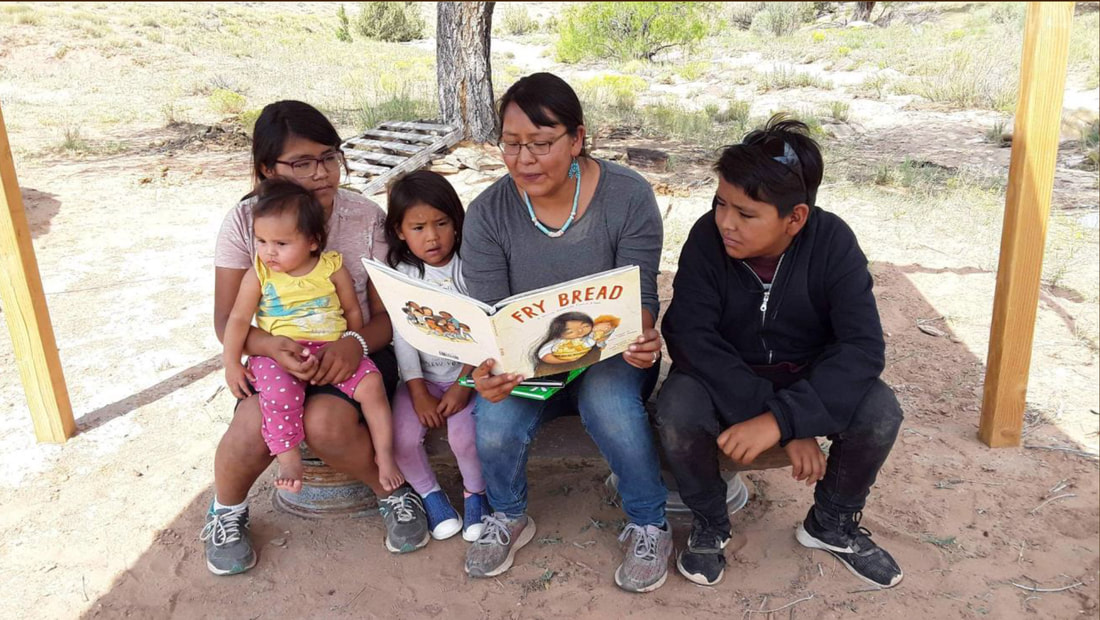

WE INVITE YOUR SCHOOL, BUSINESS, FAITH COMMUNITY OR ANY OTHER ORGANIZATION TO BECOME A BOOKMOBILE COMMUNITY PARTNER:
1. Community Partners adopt the R.E.A.D. in Beauty Bookmobile for a calendar month and help cover the monthly operational costs (approximately $5000).
2. Community Partners can also collect new or used books for the Bookmobile (optional).
3. Community Partners will be named on the actual Bookmobile and listed on our website, social media posts etc. for the year.
JANUARY: The University of Utah Pediatric Department
FEBRUARY:
MARCH:
APRIL: Rotary eClub of the State of Jefferson (D5110)
MAY:
JUNE: Flagstaff BOOKMANS Bookstore and Coffee Shop
JULY:
AUGUST: Chinle Unified School District
SEPTEMBER:
OCTOBER: Chinle IHS Hospital Alumni
NOVEMBER:
DECEMBER:
THANK YOU SO MUCH COMMUNITY PARTNERS!
1. Patricia, Miriyam, Sue and Paula in LA that have worked SO many hours on the Bookmobile proposal and details!!!
2. The Shurl and Kay Circi Foundation
3. Babbitt Ford in Flagstaff, AZ. - Thank you Mr. Alan Chan for helping us order and convert the Transit Van into a Bookmobile
4. Private Foundation in Phoenix, AZ that donated $40K in our initial stages. (Biggest Hugs Friends!)
5. ALL of our wonderful GoFundMe supporters over the past year during our start up campaign! Each and every gift made a difference.
6. SFNT Foundation
7. Desert Ford Foundation
8. Ford Operation Better World

How ‘Daylighting’ Buried Waterways Is Revitalizing Cities Across America
Urban centers are exhuming creeks and streams once covered up to control floodwater—and bringing life back in the process

By Jim Morrison
For a century, Jordan Creek cut across downtown Springfield, Missouri. As in so many other 19th-century cities, the waterway was a founding centerpiece of the town. But over the decades, the creek regularly unleashed a tantrum of flooding into the city’s commercial heart. By 1927, residents had tired of rebounding from one watery attack after another. They created tall concrete banks to cage the creek. When that wasn’t enough and the area flooded again five years later, the city entombed the waterway, adding a lid and encasing it in tunnels hidden under city streets.
“It was man’s attempt to confine and control this floodwater,” says Kirkland Preston, an engineer in Springfield’s Public Works Department. “That was the old way of thinking.”
For a while, that controlled the floods. But the creek festered in its concrete coffin, a stagnant dumping ground for junk that filled with polluted runoff in seconds during storms and overflowed into other streams. Eventually, the water won. It always does. The neighborhood flooded in 2000, 2008 and 2016. Property damages ranged from $1 million to $15 million. For two decades, the city discussed freeing the creek and allowing water to disperse over the floodplain. Finally, after a process that involved public input, a design phase and securing funding, a $25 million plan to uncover 1,100 feet of Jordan Creek and build three bridges is moving forward.
“The new way of thinking is to give the water some room, allocate the riparian area to floodings and just let nature be nature,” says Preston, the project manager for Renew Jordan Creek.
Exhuming buried waterways to bring them back to life is a process known as “daylighting.” Concrete culverts and other coverings are removed and an attempt is made to restore the natural flow and the surrounding ecosystem. Prodded partly by increased flooding resulting from more intense and more frequent rainstorms, cities across the country are shining the light on once-dark creeks, streams, brooks and rivers. Boston; Providence, Rhode Island; New York; Berkeley, California; Dubuque, Iowa; Norfolk, Virginia; Detroit; St. Louis; and Charlotte, North Carolina, have all either completed daylighting projects or have them in the works.
The primary goal of the Springfield project is flood control. But, like other daylighting projects across the country, the work has a variety of benefits. Native plantings will help improve the water quality by filtering storm runoff. The stream will replace what has become an unsightly, graffitied landscape that is an unsafe sheltering spot for the city’s homeless. As the design report notes, the green space will become jewelry in a “string of pearls” connecting parks and green areas in the city’s “Quality of Place” initiative. “Words like ‘transformational’ get used a lot to describe the project,” Preston says, “because it is an underutilized part of downtown and it’s right near Missouri State University. It has the potential to be really impactful.”
The benefits go beyond mitigating flooding and creating soothing green spaces, too. Ann Riley, the author of Restoring Neighborhood Streams and one of the first proponents of daylighting, likes to say that “stream restoration is neighborhood restoration.”

Proponents in the early days decades ago, she says, often were business owners who wanted to make urban areas attractive again. The Springfield project may spur economic development and increase property values and tax revenue, something that’s happened in other cities. Returning the Napa River as the centerpiece of Napa, California, removed a requirement for flood insurance and is credited as a catalyst for $1 billion of investment in hotels, shops, restaurants and office space.
In other cities, daylighting helps relieve the pressure on overburdened stormwater and sewer systems. It diverts clean water from wastewater plants, saving cities money to pay for treatment. While the projects can be expensive, they end costly maintenance. In a few cities, cost-benefit analyses showed returning to nature was cheaper than maintaining concrete culverts. And they may right a wrong. In some cities, public housing was built atop buried rivers, causing flooding and health problems for residents. Norfolk, Virginia, tore down public housing and daylighted a creek that is the core of a park that also provides flood protection.
“Daylighting reveals another layer of these hidden worlds of streams, right under our feet in the cities,” says Gary Belan, senior director of clean water supply at American Rivers, which has promoted the practice and published a white paper on it. “It’s exciting to be able to re-explore and rediscover those assets.”
Those waters initially were the heart of cities. But as cities grew, flooding became a problem. So did the lack of space. Burying streams created room for housing and industry. The combination of development and streams channeled into underground pipes became a solution that was a problem. Roads and other hard surfaces prevented water from soaking into the ground and funneled more rainwater into the enclosed streams than they could handle.
That cycle repeated in city after city. Stream after stream disappeared, lurking below. Researchers at the University of Maryland reported that 66 percent of Baltimore streams are buried. One study found that Philadelphia had covered 73 percent of its streams. Detroit has lost 85 percent of its stream channels since 1902. An interactive map created by the District of Columbia shows the dramatic transformation: a squiggly maze of historical streams, and a smaller, sterile portrayal of what remains. Only 30 percent of the streams that flowed through the district at the start of the 19th century remain today. Washington, D.C. is among cities including Oakland, California; Baltimore; and Portland, Oregon, that have created buried stream maps.
Look at old maps of streams and creeks now enclosed and you’ll see urban areas flooding today, as the old culverts no longer have the capacity to manage modern “rain bombs” that can dump two to four inches of precipitation in an hour. “A lot of cities have decided to do this [daylighting] as the flooding becomes too much of a problem,” Belan says. “They need to give the water more room.”
Eric Sanderson, a senior conservation ecologist with the Wildlife Conservation Society, has written that New York’s map where extreme flooding occurs “is, for all intents and purposes, a map of the old streams.”
Bringing streams out of the darkness can be expensive. In one of New York’s largest infrastructure projects, the city is daylighting Tibbetts Brook, a small stream that flows from Yonkers to the Bronx and into the Harlem River. Part of the brook was buried in 1912. The cost of uncovering a mile will run $133 million, including acquiring real estate.
For decades, environmentalists campaigned to daylight the brook, which adds 2.2 billion gallons of freshwater into outdated pipes that carry combined sewage and stormwater to treatment plants. Nothing happened. In 2021, rain from the remnants of Hurricane Ida overloaded the system. In the Bronx, the surveyors later found water reaching close to six feet in Van Cortlandt Park. The Major Deegan Expressway became a river, submerging dozens of vehicles.
For New York, restoring the brook is a bargain. The city is under a consent order with the state to reduce stormwater overflows and improve water quality. Daylighting Tibbetts Brook is designed to provide a combined sewer overflow reduction to the Harlem River of 220 million gallons per year, about 25 percent of the overages. “This made this project one of the most cost-effective green infrastructure projects and at a magnitude that was incomparable,” says Angela Licata, deputy commissioner of sustainability for the city’s Department of Environmental Protection. “This really was a trifecta of [combined sewer overflow] reduction, recreational improvements, and the ecological co-benefits of having the water exposed again to air and running through a wooded habitat.”
While the Tibbetts project won’t begin construction until 2025, Licata says she hopes it will be the first of more daylighting projects that may fit into New York City’s Bluebelt Program, which preserves natural drainage corridors. “As an ultra-urban mega city, we paved over quite a lot of these streams and brooks,” she says. “We very much want to see whether or not we can find another stream to daylight, another corridor with which to release a stormwater flow that could then be part of a natural stream.”
New York City could look to Kalamazoo, Michigan, for an idea of what the future holds for a daylighting project. In 1995, the city uncovered five downtown blocks of Arcadia Creek, hidden for a century and used as a sewer. The plan was part of redeveloping the area, which had become depressed after repeated flooding. It came together through an alliance of citizens, local businesses and the city. The city issued bonds to fund the revitalization. A community college constructed three buildings, including a museum. A consortium of local hospitals built a cancer center, and a bank invested in a building. Historic buildings have been renovated. Restaurants, a hotel, housing and other businesses followed. A parking lot became a pond, the end point for the creek and the site of festivals. The $18 million public investment has yielded hundreds of millions of dollars in private investment, increasing the city’s tax base.
Because the city had grown up so close to the creek, recreating a naturalized channel was not possible. So Kalamazoo built an artificial revision of an artificial creation, daylighting the creek but also pouring deeper culverts to control flooding. That removed the requirement for flood insurance in the area. When a 100-year storm flooded the area in 2018, Arcadia Creek worked, keeping the downtown dry.
Arcadia Creek proved to be, as Riley says, a stream restoration that was a neighborhood restoration.
The project anchored a number of institutions in the city’s downtown, brought millions of dollars of private investment and spurred other restoration efforts in the area. “I think Kalamazoo can look at the daylighting of the Arcadia Creek as the beginning of the revitalization of downtown,” says Jeff Chamberlain, a deputy city manager. “It had a ripple effect.”
weekly@StateOfJeffersonRotary.org

The Frightening Legacy of Typhoid Mary
With concerns about infectious disease in the news, a look back at history’s most famous carrier

By NOVA | The Most Dangerous Woman In America | In Her Own Words | PBS., where it is credited to the June 20, 1909 issue of The New York American. Hence published prior to 1923., Public Domain, Link
One March day in 1907, a man appeared at the Park Avenue brownstone where 37-year-old Mary Mallon worked as a cook. He demanded a little bit of her blood, urine and feces. “It did not take Mary long to react to this suggestion,” the man later wrote of the encounter. “She seized a carving fork and advanced in my direction.”
The man with the strange request was George Soper, a sanitary engineer investigating a typhoid outbreak at a house in Oyster Bay, Long Island, where Mallon had worked. Soper believed that Mallon was a healthy carrier of the disease, a relatively new idea at the time. Later, he returned, and after evading authorities for five hours Mallon was betrayed by a scrap of her dress, caught in the door of her hiding place.
When she tested positive for typhoid bacteria, the Department of Health forcibly moved her to North Brother Island, a dot of land in the East River just off the Bronx that housed a quarantine facility. She was released in 1910, after swearing she wouldn’t cook professionally again. Five years later, she was found working in the kitchen at a hospital where a typhoid outbreak was underway. This month marks 100 years since Typhoid Mary was apprehended for the second and final time, living the next 23 years—the rest of her life—under quarantine.
 Mallon’s legend grew almost immediately. A newspaper illustration during her first imprisonment conveyed the public’s morbid fascination with her: An aproned woman casually drops miniature human skulls into a skillet, like eggs. Today, the name “Typhoid Mary” stands for anyone who callously spreads disease or evil. There’s even a Marvel comic book villain named after her: a female assassin with a vicious temper.
But the real story is more complicated than the caricature. Historians such as Judith Walzer Leavitt, author of Typhoid Mary: Captive to the Public’s Health, point out that by the time of her second imprisonment Mallon was far from the only known carrier. There were thousands across the country and hundreds in New York, and today we know that being a carrier of disease is not that unusual: Up to 6 percent of people who’ve had typhoid, which is still common in the developing world, can spread it long after they’ve recovered, even if they exhibited few or no symptoms, says Denise Monack, a microbiologist at Stanford. Monack has shown that genetic mutations might allow bacteria to climb unnoticed into immune cells, where they take up long-term residence.
So why was Mallon alone among carriers imprisoned for life? “That’s the million-dollar question that nobody can answer,” says James Colgrove, a professor of sociomedical sciences at Columbia. It might have been because she was female, Irish, uncooperative and without a family. Today Mallon’s case is archetypal in bioethics literature, as scholars debate when the government is justified in depriving someone of her freedom for a perceived greater good—an issue with renewed public resonance when health workers returning from Ebola-ravaged West Africa are quarantined against their will. But Mallon’s case also endures as a symbol of a transitional moment, before antibiotics, when microbes were first revealing themselves to science. Neither Mallon nor the public quite understood what she was being accused of, which must have felt like something akin to thought crime.
Mallon died in 1938, after more than two decades on North Brother Island. She never lost the sense of persecution she evinced in a 1909 letter to a lawyer, feeling herself a “peep show for every body.” The medical staff and residents, she wrote, would see her and say, “There she is, the kidnapped woman.”
By Unknown artist - this is an illustration that appeared in 1909 in The New York American. (According to the precise date was June 20, 1909)., Public Domain, Link
You are not authorised to post comments.