
  |
|
March 16, 2023 |
 With the traditional ringing of the bell we bring this meeting to order!
Club member's attendance is recorded by logging in.
Visiting Rotarians may complete a makeup form at the end of this meeting; YOUR donation for making up with us helps fund our service projects!
Visitors are always welcome to browse and register without obligation.
Our club offers the flexibility of ROTARY ON YOUR TIME!
and an opportunity to remain connected with Rotary!

Welcome to this week’s meeting of the eClub of the State of Jefferson.
I am Bob Gibson, President of the Rotary eClub of State of Jefferson. Welcome to this week’s meeting. I hope this finds you well.
Our collaboration with the Rotary Club of Durango, Colorado is producing tangible results. I spoke with John Allman today. The installation of solar lights will be continuing. Our Action Grant of $500 has been used to provide a portable satellite dish. Originally, this was to be used by the young people for their connection to educational materials. A concomitant benefit is to provide a connection for a broader group for access to social services and other critical uses. They are in the process of acquiring materials for the bookmobile, utilizing funds from our District Grant. Isn’t this what Rotary service is all about? My thanks to all of our Rotarians who have worked on these applications and made this happen.
Today I received an email from Tatiana Godok, President of the Rotary eClub of Ukraine. We are in the initial stages of arranging for us to visit with each other and develop a way we can work together. I believe this is a unique service opportunity for our Club.
Thank you for your interest in our Club and your commitment to “Service above Self.”
Enjoy the meeting.
If you have any questions or comments, I am available. My e-mail address is: bob@bluewaterphoto.net.
email president@StateOfJeffersonRotary.org

eClub Board Meeting, March 16, 2023
08:00 AM Pacific Time (US and Canada)
St. Patrick's Day, March 17th

District Training Assembly March 28, 2023, Cottage Grove
This in-person meeting will be held at the Phoenix High School, 745 N Rose St, Phoenix, Oregon.
We will begin at 9 am. Lunch is provided at noon. Please Register NOW for Fourth Quarterly Grants Meeting so we may get a head count for food (it’s free).
District Conference, May 6-7, 2023
March is Water and Sanitation Month

Clean water, sanitation, and hygiene education are basic necessities for a healthy environment and a productive life.
When people have access to clean water and sanitation, waterborne diseases decrease, children stay healthier and attend school more regularly, and mothers can spend less time carrying water and more time helping their families.
How Rotary makes help happen
Through water, sanitation, and hygiene (WASH) programs, Rotary’s people of action mobilize resources, form partnerships, and invest in infrastructure and training that yield long-term change.
The Rotary Foundation is changing the world by providing grants for projects and activities around the globe and in your own backyard:
WASH Global Grant Projects: Since 2013, The Rotary Foundation has invested in more than $130 million in over 2000 projects worldwide. Through this investment, our volunteers of action have improved access to safely managed and basic WASH services to communities, schools and healthcare facilities, while protecting and conserving water resources.
Rotary-USAID WASH Partnership: Rotary and the United States Agency for International Development (USAID) assist communities and governments to plan, finance and deliver safe water, sanitation and hygiene services, while sustainably managing water resources.
WASH in Schools Target Challenge: Rotary challenges our members to develop sustainable projects that comprehensively address the most pressing water, sanitation, hygiene and education needs in Belize, Guatemala, Honduras, India, and Kenya.

eClub Rotarian Dan Smith, live in the Ukraine


I am in Lviv today, here for PETS. It is so busy there is not much I can do so back to the hotel to play catch-up.
By Monday I will have a lot of stories posted on the website, Facebook, etc. It has been challenging. I have been without internet, which can be scary when you are traveling in between place. Hotels have Wi-Fi so that helps. They tell me Russia is blocking all foreign services. I finally bought a Ukrainian mobile phone to use as a hot spot. Now I'm a two fisted mobile dude.
Such incredible stories from remarkable people. North of Kyiv we visited Moshchun where the Russian invasion was stopped. Devastated the village. Talked with a doctor whose husband and son were shot and taken to Belarus. The son is still there. Visited the Rotary "village" temporary housing, and clinic. Met with the club, the hub where they distribute humanitarian aid and much more.
Then to Cherkasy and meet with Tatiana Ocheret, a journalist, and her team. Had the most incredible encounters. Visited and presented to students at the University. It happened to be the celebration of Taras Shevchenko, a poet from the 19th century, with songs, displays, flowers, poetry. He is the Ukrainian hero. If you want to know about the heart of Ukraine, read his poetry.
Went to several volunteer centers where they support orphans, the elderly, and their solders, who are their children. Which is an important fact. Rotary tends to get caught up in this "we will not support war" but what would you do if your husbands and sons were fighting just a few miles away to protect you from a truly evil army? Somehow, the Rotary position seems hollow here.
Just by chance, we had a concert by some Ukrainian students in the parking lot and an incredible spontaneous singing of the national anthem by the volunteers. I guarantee you these stories and things we experienced will move you and give you goosebumps. They even invited me to go on a medical supply run to Bakhmut. Can you imagine what would happen to an American on a military first aid supply run behind Russian lines. Thanks, but a bit too much risk just now.
Meet with the Rotaract and Interact clubs to talk about helping us collect the "voice" of Ukraine by reaching out to the people and asking for stories, poems, songs, short videos. The Library of Congress, Harvard Ukrainian Research Institute, and the Hoover Institution, Stanford University are putting together an archive to capture this moment in Ukraine, wouldn't it be great to have Rotary be a part of this archive. Some differences in approach. Here they want more "produced" presentations to put the best face out there; I want the raw unedited voices. What do you think?
Well, have to get back to posting so you can see this all.
Thanks,
Dan
Want to Experience What It’s Like to be in Kyiv?
We hear stories and watch the news, but what is it really like to be in Kyiv? To live under the constant threat of being attacked again and bombed?
Here is a proposal for those who really want to share this experience with the people of Kyiv.
- Download one of these apps.
- Set the location for Kyiv
- Every time the alert sounds, stop and just imagine what is going on. Do you go to the shelter? Do you just go on with your day?
- Send a prayer or a thought to the people living there, they just got the same alarm.
https://play.google.com/store/apps/details?id=com.ukrainealarm
https://apps.apple.com/us/app/ukraine-safety-alerts/id1613373267
If you are in a store or business, they will ask you to either leave or go to their bomb shelter.
In my trip to Ukraine I had the privilege of delivering humanitarian aid from the Rotary Club of Springfield to the Rotary Club Kyiv. It included crank flashlights, that never need batteries, and emergency Mylar Bivvy or sleeping bags. The club will distribute these to the people in Moshchun and Eastern Ukraine.
It turns out the Bivvy bags will not only provide warmth for sleeping but also save lives. One of the problems they have is keeping patients warm as they transfer them from the front to hospitals where they can receive emergency care.
Thank you, your donations truly save lives.
AND
Stories, not stats, attract people to Rotary

By Joe Otin, governor-elect of Rotary District 9212 (Eritrea, Ethiopia, Kenya, South Sudan)
I gravitate naturally to statistics despite the negative feelings some people have about them. I think that information is the fuel that our world runs on and without it our systems will sputter, stall, and shut down. That is because statistics are significant in decision making.
When I joined the Rotary Club of Nairobi East, Kenya, 19 years ago, I was told that good Rotarians were defined by the regularity of their attendance, the frequency of their gifts to The Rotary Foundation, and most importantly by their ability to introduce new members to the club.
In my quest to be a valuable member, I turned to statistics as a way to demonstrate the credibility of Rotary to family, friends, and neighborhood skeptics. I learned all the important stats by heart and would spit them out at the slightest provocation. If someone happened to notice my membership pin, they would get a barrage of information enough to weigh down even the strongest weightlifter.
A different way
Only a bolt of lightning would get my victims to wake up again by the time I was done talking. I thought I was promoting the club but instead I was boring them to death.
Looking back, it shouldn’t have been a surprise to me that my recruitment efforts led to naught. Not a single person that I targeted with my facts and figures joined the organization. Yet other members invited guests to our lunches every week, and these guests eventually joined our club within a month or two.
One day I got a call from a business journalist who wanted to discuss the results of a survey that my company had recently published. This was not unusual because in those days I worked for a research company and media executives regularly called me for insights and information.
The human and relatable stories we tell are the ones that fire emotional triggers and create the special connections we have in Rotary.
We met at a popular restaurant and after trading personal stories, I casually brought up a Rotary event I had gone to over the weekend where we’d commissioned a sports arena in a school that was situated in a nearby slum. That story captured her imagination so much that by the end of our meeting she asked for an invite to my Rotary club. She eventually became the first person that I successfully introduced into membership without having to twist their arm.
The business journalist I speak of is none-other-than Carole Kimutai, who went on to become one of the most celebrated past presidents of the Rotary Club of Nairobi-East.
I learned something from that experience. Nobody really cares about statistics and data; they are more interested in what the experience means to you and me. People tend to follow the passion and the feelings that they see in us, which creates an emotional connection that is more powerful than a rational thought process.
Telling stories
I learned to tell stories about my Rotary experiences. I spoke about the members and the interesting things that they did. I spoke about the people that we worked with on various projects who seemed to have a deeper understanding of life because of their service to mankind. I spoke about the social interaction, new relationships and old friendships, and the impact that they had on my life.
I also described those ripples that oscillate in my soul whenever I see happy faces of needy children who receive new books or toys, and the joy of mothers who bring their children to medical camps for free health checkups.
The results speak for themselves. In my first three years of spewing statistics, I didn’t bring in any new members. In the following 16 years, I have introduced over 30 new members, and together with Jim Wilson and George Mathenge, launched a new club with over 35 members. This club has gone on to form another club with a similar number of charter members.
The human and relatable stories we tell are the ones that fire emotional triggers and create the special connections we have in Rotary. Whether it is through face-to-face interaction, on social media, or even when presenting a speech to a large audience, we can make our clubs appealing by defining and articulating what is truly meaningful to us.

 For polio eradication efforts, 2022 brought good news.
Fewer genetic strains of the virus are circulating than ever before. Afghanistan and Pakistan are the only two countries where polio remains endemic. And support from political, medical, and community leaders in those areas has strengthened vaccination efforts during the past year. Global support for polio eradication also reached new heights, as was proven at the World Health Summit in October, when Rotary and international partners and donors pledged a combined US$2.6 billion to eradicate the disease.
There were challenges in 2022 as well. The poliovirus appeared in places it hasn’t been for a long time: Israel, the United Kingdom, and the United States, to name a few. Wild poliovirus cases were reported in Mozambique, related to the 2021 case in Malawi caused by wild poliovirus imported from Pakistan. News of these cases didn’t slow our eradication efforts, however. If anything, it made us even more determined. Now is our best chance to finish the fight against polio.
In 2023, we need everyone’s help. We invite you to use the call to action “Together, we end polio” to express our collective will to finish the job. Explore the shareable images, ads, and other materials on Rotary’s Brand Center, and check again throughout the year, because we’ll add even more content. Let’s work together to end this disease forever.

Save the Date! June 7th, 2023 to participate in Navajo Solar light installations.
Housing is limited. Contact John Allman to reserve your space and to get more information.
The Bookmobile has been funded and ordered but there have been many delays because of national microchip shortages for FORD! But we continue to move forward as we're anticipating the new van and CPH is now entering into our second phase of the project... COMMUNITY PARTNERS ARE ESSENTIAL FOR KEEPING THE BOOKMOBILE PROJECT SUSTAINABLE. PLEASE CONSIDER JOINING OUR COMMUNITY PARTNERSHIP TEAM! 
R.E.A.D. in Beauty Bookmobile
Read. Empower. Adventure. Dream.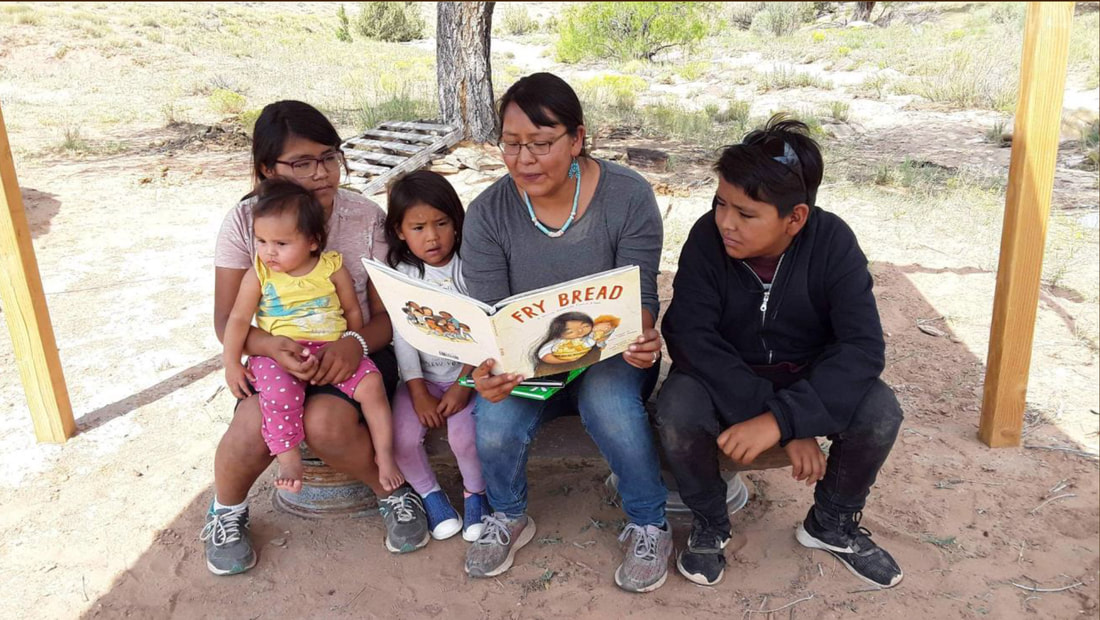

WE INVITE YOUR SCHOOL, BUSINESS, FAITH COMMUNITY OR ANY OTHER ORGANIZATION TO BECOME A BOOKMOBILE COMMUNITY PARTNER:
1. Community Partners adopt the R.E.A.D. in Beauty Bookmobile for a calendar month and help cover the monthly operational costs (approximately $5000).
2. Community Partners can also collect new or used books for the Bookmobile (optional).
3. Community Partners will be named on the actual Bookmobile and listed on our website, social media posts etc. for the year.
JANUARY: The University of Utah Pediatric Department
FEBRUARY:
MARCH:
APRIL: Rotary eClub of the State of Jefferson (D5110)
MAY:
JUNE: Flagstaff BOOKMANS Bookstore and Coffee Shop
JULY:
AUGUST: Chinle Unified School District
SEPTEMBER:
OCTOBER: Chinle IHS Hospital Alumni
NOVEMBER:
DECEMBER:
THANK YOU SO MUCH COMMUNITY PARTNERS!
1. Patricia, Miriyam, Sue and Paula in LA that have worked SO many hours on the Bookmobile proposal and details!!!
2. The Shurl and Kay Circi Foundation
3. Babbitt Ford in Flagstaff, AZ. - Thank you Mr. Alan Chan for helping us order and convert the Transit Van into a Bookmobile
4. Private Foundation in Phoenix, AZ that donated $40K in our initial stages. (Biggest Hugs Friends!)
5. ALL of our wonderful GoFundMe supporters over the past year during our start up campaign! Each and every gift made a difference.
6. SFNT Foundation
7. Desert Ford Foundation
8. Ford Operation Better World

March is Rotary's Clean Water and Sanitation and National Heritage's Women in History month.
Two articles this week, one is the problem and one is a possible solution
And plastic pollution has been doubling every six years
Humans have filled the world’s oceans with more than 170 trillion pieces of plastic, dramatically more than previously estimated, according to a major study released Wednesday.
The trillions of plastic particles — a “plastic smog,” in the words of the researchers — weigh roughly 2.4 million metric tons and are doubling about every six years, according to the study conducted by a team of international researchers led by Marcus Eriksen of the 5 Gyres Institute, based in Santa Monica, Calif. That is more than 21,000 pieces of plastic for each of the Earth’s 8 billion residents. Most pieces are very small.
The study, which was published in the PLOS One journal, draws on nearly 12,000 samples collected across 40 years of research in all the world’s major ocean basins. Starting in 2004, researchers observed a major rise in the material, which they say coincided with an explosion in plastics production.

The findings pointed toward both the vast amount of plastic that is flowing into the world’s oceans and the degree to which it is journeying long distances once in the water. The study may deliver a jolt of energy to U.N. talks to reduce global plastics pollution that started last year.
“This exponential rise in ocean surface plastic pollution might make you feel fatalistic. How can you fix this?” said Eriksen, a founder of the 5 Gyres Institute, a nonprofit group that works to study and fight ocean plastics pollution.
“But at the same time, the world is negotiating a U.N. treaty on plastic pollution,” Eriksen said.
The weight of all that plastic is equivalent to about 28 Washington Monuments. The samples that were studied end in 2019, so several more Washington Monuments of plastic are likely to have dropped into the sea since then.
Eriksen and the other researchers traveled the world’s oceans to collect samples, combed the archives of previous researchers for unpublished data and incorporated other peer-reviewed studies into their analysis. They used new models to estimate the quantity of plastic, leading to sharply revised, higher numbers compared with a 2014 study by Eriksen and some of the same researchers that used a much smaller set of data.
Only 10 percent of the plastic ever made has been recycled. The material that doesn’t make it into landfills can get swept into rivers or directly into oceans. It slowly breaks down into smaller and smaller pieces, known as microplastics, which are less than 5 millimeters in length and can be eaten by marine life. Plastic has been found near the summit of Mount Everest and inside the deepest point on Earth, the Mariana Trench — as well as in the human bloodstream.
The study examined plastic samples over 40 years starting in 1979. The researchers found a fluctuating amount of plastic in the samples until 2004, when the numbers started to skyrocket. The increase in plastic particles in the oceans corresponds to a previously observed increase of plastic on global beaches over the same time period, they noted.
“These parallel trends strongly suggest that plastic pollution in the world’s oceans during the past 15 years has reached unprecedented levels,” the study said.

The data includes samples from the world’s five major gyres, or current systems, which sweep particles from inhabited areas to create large collections of refuse. The best known of these is the Great Pacific Garbage Patch, where plastics float slightly below the surface.
In looking at samples, the researchers concentrated on the North Atlantic and North Pacific ocean basins, partly because they have been studied more frequently over the decades and are where greater concentrations of the world’s population lives. But high concentrations of plastics were found everywhere.
Global negotiators hope to complete the plastics treaty by 2024. It would regulate all aspects of the life cycle of plastic, including the kinds of chemicals that go into it and whether it’s easily recyclable. Anti-pollution campaigners say it is far easier to deal with plastic before it enters waterways than it is to clean it up afterward.
Eriksen, the study’s lead author, said research into plastics pollution had in recent years started to shift away from oceans and move farther upstream, to rivers and other waterways, as advocates struggled to understand the issue at its origin.
“The plastic pollution, it’s in every biome,” he said. “It’s not just in oceans anymore.”
AND

The Ocean Cleanup is an organization using high-tech tools to remove trillions of pieces of plastic pollution and other trash that make up the Great Pacific Garbage Patch — but what happens to this waste once it gets collected from the ocean?
How big is the Great Pacific Garbage Patch?
The Great Pacific Garbage Patch (GPGP) is a floating vortex of debris in the North Pacific Ocean. It spans 1.6 million square kilometers (or over 600,000 square miles) from California to Japan with Hawaii in the middle.
The trash found in the GPGP varies in type and size, but the majority of it is made of plastic.
Microplastics — tiny pieces of plastic — make up only 8% of the GPGP’s total mass, but they have an outsized effect. Of the estimated 1.8 trillion pieces of plastic floating in the GPGP, 94% are microplastics.
Plastic pollution in the ocean threatens marine life in several ways — poisoning and starving fish, bleaching coral, and harming reefs.
Oceanic plastic is one of the most troubling pollution issues we face today, not only because it disrupts ocean ecosystems but also because it’s very challenging to collect and get rid of.
Unlike other materials, plastics don’t decompose — they continuously break down into microplastics but never truly disappear. The sometimes microscopic-sized microplastics swirling within our striated, vast, and deep oceans make collecting oceanic plastic pollution nearly impossible.
What is The Ocean Cleanup?
The Ocean Cleanup is a nonprofit that uses various technologies to collect trash from our oceans and intercept it in rivers before it enters our oceans.
The Ocean Cleanup’s System 002, also known as “Jenny,” is a focal point for supporters and critics. Jenny uses two fuel-powered ships to tow a U-shaped catchment system across the ocean’s surface. Once Jenny fills up with debris, it brings the garbage to a larger boat where it’s unloaded and carried ashore.
What happens to all the trash in the GPGP?
The Ocean Cleanup claims that it recycles a majority of the plastic it collects. The organization says it uses some of the plastic to create “durable and valuable” products.
The remaining unrecyclable, unusable plastic debris gets incinerated to generate electricity, as Dezeen reported. This process of turning waste into energy is known as thermal recycling.
Yet some experts are unsure of The Ocean Cleanup’s approach to reducing oceanic plastic pollution. Journalist Cristina Gabetti told Dezeen that The Ocean Cleanup’s claim about recycled plastic sounded “very optimistic.” This remark could be rooted in the fact that very little plastic — only about 5% in the U.S. — actually gets recycled.
Another area of concern is turning plastic waste into energy. It’s been shown that thermally recycling plastic releases toxins and pollutants into our air, soil, and water, ultimately threatening human health.
How do we tackle plastic pollution?
Though The Ocean Cleanup has faced its fair share of criticism, it’s removing debris in the ocean that harms marine life.
“I think they’re coming from a good place of wanting to help the ocean, but by far the best way to help the ocean is to prevent plastic from getting in the ocean in the first place,” Miriam Goldstein, director of ocean policy at the Center for American Progress, told Reuters last year.
Ocean scientists agree that in order to have a lasting positive impact on marine life, oceans, and the planet, we need to scale back our use of plastic. Besides creating less plastic waste, another way we can keep it out of the ocean is to collect it before it enters our oceans. This is what projects like The Ocean Cleanup’s river interceptors and Baltimore’s infamous Mr. Trash Wheel are actively working to do.
weekly@StateOfJeffersonRotary.org

The more trees planted in a neighborhood, the longer people live, according to a recent study led by U.S. Forest Service researchers out of Portland, Ore.

Put down the apple. It’s the tree that may help keep the doctor away.
In urban areas, trees shade sidewalks, suck up air pollution, soften traffic noise — and are just plain nice to look at. And by taking climate-warming carbon out of the atmosphere, trees are good for the planet, too.
It turns out the health gains of all that greenery add up.
A recent study conducted in Portland, Ore., found that in neighborhoods where a nonprofit planted more trees, fewer people died.
The paper, by researchers at the U.S. Forest Service, adds to a budding body of research into the health benefits of living around greenery. Its findings amount to a prescription for policymakers to plant more trees.
“Urban trees are an essential part of our public health infrastructure, and they should be treated as such,” said Geoffrey Donovan, the Forest Service researcher who led the study published in the December issue of the journal Environment International.
Using a mathematical model to control for factors such as race, income, age and education, the team found that for each 100 trees planted, there was roughly one fewer non-accidental death a year.
“Across the board, the benefits of trees are astounding,” said Yashar Vasef, executive director of Friends of Trees, which plants across six counties in Oregon and Washington. “And they come at a lower cost than many other solutions.”

The health benefits of living among trees bloomed as the trees themselves grew. As the trees got older, grew taller and cast their leafy limbs wider, the mortality rates among people nearby went down, the study found.
Or as Donovan summed it up: “Bigger trees, bigger impact on mortality, which is what you would expect.”
The findings are in line with results from other researchers suggesting nature is good medicine for many ailments, including depression and high blood pressure. Another recent study in the British medical journal The Lancet suggested a third of premature deaths from a 2015 heat wave in Europe could have been avoided with 30 percent more tree cover.
“Many other global studies have looked at similar research questions but use different study designs,” said David Rojas-Rueda, an assistant professor of epidemiology at Colorado State University who has studied the health benefits of vegetation but was not involved in this latest paper. “Most evidence confirms that tree planting is beneficial in reducing premature mortality.”
There are several reasons trees may boost health, including better air quality, reduced stress and increased physical activity among those in tree-lined neighborhoods. The link between planting trees and lowering death rates held in both already leafy neighborhoods, which tend to be wealthier, and tree-deprived neighborhoods, which tend to be poorer.
“Studies have found links between exposure to the natural environment and improved health in a wide range of different cities and countries,” Donovan said. “We certainly know that air pollution, stress, and sedentary behavior are bad for people no matter their race or socioeconomic status.”
The reverse, unfortunately, seems to be true, too. Mortality rates appear to go up in areas that lose tree cover.
In a previous study, Donovan and colleagues saw an uptick in deaths related to cardiovascular and lower-respiratory-tract illness in counties from Minnesota to New York that lost trees to a wood-burrowing pest called the emerald ash borer.
The study out of Portland has its limitations. Donovan’s team did not have access to individuals’ health records. Instead, the team looked at neighborhoods’ overall deaths. And the researchers did not have other detailed data that could shed light on other factors affecting residents’ health, such as a neighborhood’s smoking rate.
The paper stopped short of asserting a direct cause-and-effect relationship between trees and mortality.
Still, Donovan has taken this research to heart. A resident of Portland since 2002, he has planted fig, plum and pear trees in his yard in Oregon.
“I’m quite fond of fruit trees,” he said. “When you get a sun-warmed fig in that bowl of yogurt and honey, it’s not so terrible.”
You are not authorised to post comments.