
  |
|
December 22, 2022 |
 With the traditional ringing of the bell we bring this meeting to order!
Club member's attendance is recorded by logging in.
Visiting Rotarians may complete a makeup form at the end of this meeting; YOUR donation for making up with us helps fund our service projects!
Visitors are always welcome to browse and register without obligation.
Our club offers the flexibility of ROTARY ON YOUR TIME!
and an opportunity to remain connected with Rotary!

Welcome to this week’s meeting of the eClub of the State of Jefferson.
I am Bob Gibson, President of the Rotary eClub of State of Jefferson. Welcome to this week’s meeting. I hope this finds you well.
eClub Rotarian Bruce Garrett, our Program Chair, is receiving his Paul Harris Recognition for the Paul Harris Fellow plus Four. This is recognition for contributions to the Rotary Foundation totaling $5,000 over a period of time.
The Rotary Foundation is the fuel for Rotary’s service. The management and strategies of the Foundation have resulted in it being ranked among the most efficient and effective charities in the world. Less than 10% of the contributions go towards administrative costs. The scope and breadth of the projects funded by the Foundation truly bring assistance and hope to every corner of the world. From efforts to eradicate polio, to supporting international conflict resolution, to developing water resources and bringing medical aid to those in need, the Foundation is there. Thank you, Bruce, for your passion and ongoing commitment in supporting the Foundation.
As we approach the Christmas Holiday, I want to take this opportunity to wish each of you a warm and joyous Holiday, whichever Holiday you celebrate. I am truly honored to be part of this Rotary Club. We have many opportunities ahead of us.
Thank you for your interest in our Club and your commitment to “Service above Self.”
Enjoy the meeting.
If you have any questions or comments, I am available. My e-mail address is: bob@bluewaterphoto.net.
email president@StateOfJeffersonRotary.org

Wishing you and your family a very Merry Christmas or Hanukkah celebration
and a happy and prosperous New Year.
District Grants Meeting January 14, 2023, at 9:00.
This meeting will be via Zoom,
December is Disease Prevention and Treatment Month

We believe good health care is everyone’s right. Yet 400 million people in the world can’t afford or don’t have access to basic health care.
Disease results in misery, pain, and poverty for millions of people worldwide. That’s why treating and preventing disease is so important to us. We lead efforts both large and small. We set up temporary clinics, blood donation centers, and training facilities in underserved communities struggling with outbreaks and health care access. We design and build infrastructure that allows doctors, patients, and governments to work together.
Our members combat diseases like malaria, HIV/AIDS, Alzheimer’s, multiple sclerosis, diabetes, and polio. Prevention is important, which is why we also focus on health education and bringing people routine hearing, vision, and dental care.
How Rotary makes help happen
We educate and equip communities to stop the spread of life-threatening diseases. Rotary members have hundreds of health projects underway around the world at any given time.


Stories from Santa
 (Photo left - Bruce Templeton, aka Santa, a member of the Rotary Club of St. John’s, Newfoundland, Canada, and the only living Canadian Santa in the International Santa Claus Hall of Fame. )
In 1979 – when I was 34 – an aunt of mine, the head of crafts for our province, asked if I would appear as Santa at a child’s event. I told her I would think about it. I went to various places and looked at Santa suits. I didn’t like the looks of any of them, so I called her back and said “No.” And she said, “Bruce, if I make the suit, will you do it?” Well, you don’t turn down the director of crafts for your province. What arrived at my house were a suit made of velvet and lambswool, a beard made of real hair, and prescription glasses. It was absolutely flawless. And that was the beginning of my Santa journey.
When I started, I was acting as Santa. But over time, you become so comfortable in a room with children that you begin to believe that you are Santa. Your behavior changes. You’re aware that there are some very serious responsibilities that come with this. I grew into being Santa. It’s something that becomes a part of your life.
Being Santa took on a larger purpose when I realized the responsibility that was being entrusted to me. I was asked to go into very tough situations, like the children’s cancer unit at the hospital. Last year I saw four children who were terminally ill and will not be alive this Christmas. When you’re prepared to make these visits fearlessly and confidently, that’s when you’re really doing the work that – I believe – we are called to do. That is when St. Nicholas joins me, and we bring hope and reassurance.
I sometimes have to find the strength and the peace to go into a senior home or a children’s hospital and visit with someone who is dying. Once I went into the room of a dying child, and the mother was there, and the little baby was in the bed. The mother took a pair of white angel wings from a bag and put them on her daughter’s back. She said, “Would you kiss her on the back of her head to start her on her journey?” So Santa did exactly what the mother asked. Then I took the prayer to St. Nicholas for a sick child from my mailbag. We prayed for peace and for freedom from pain. And then Santa left the room.
Two days later a call came from the hospital. “Mr. Templeton,” they said, “will you come to the children’s department? There’s a letter here for you.” The letter was from the mother. It said, “My daughter and I have gone home. My daughter started to get better the minute you said the prayer for her.” And that little girl lived for another three years before she passed away. And then I went to her funeral.
These are experiences that have nothing to do with playing Santa. It’s something you evolve into, and I only think of it as a calling in Service Above Self.
I’ve had a wonderful time visiting with seniors. There’s a toy company that gives me teddy bears every year, and I give them away on every visit. One year, I went to the senior’s home and heard bells ringing down the hall. I looked up, and there was this dear soul coming down the hall with a walker with Christmas lights on it – and there was a teddy bear hanging from the walker. She said, “Hello, Santa, I fooled you, didn’t I? I’m 100 now, and you gave me this teddy bear when I was 98. You
didn’t expect me to be here, did you?” And then she gave me a big hug.
I enjoy giving a senior a chuckle, though I notice enormous differences when I go from room to room. I can go into one room and find a bright senior dressed in a sweet Christmas outfit with flashing lights. In the next room, it might be dark and morose, and I’ll find somebody curled up in bed in a fetal position. When I asked one senior what she would like for Christmas, she said, “Santa, do just one thing. Please tell my family where I am for Christmas. And please tell my family that I love them. “So you find senior’s homes can be highly emotional. As you go from room to room, you never really know what you’re going to encounter.
Every year, we fly 18 children to the North Pole on a real plane. And every year there’s always one child who is terminally ill and not likely to live until next year. The plane – which has Christmas wrapping paper over the windows – takes off, flies around for about 30 minutes, and then lands at the North Pole. That’s when Santa gets on the plane, completely covered in snow. I walk down the aisle and shake snow all over the place. The children go nuts.
We have a seating plan, so we know where every child is seated. Thanks to the parents, we have the one gift the child dreams of getting on Christmas. Every child is given a gift from Santa, and then the plane takes off again. That’s when the kids take the Christmas wrapping off the windows and the children can see they’re landing back in St. John’s on the plane. It’s pretty amazing.
Santa is expected to answer one question from each child. We know the questions from the seating plan, and the further I get into the plane, the more likely I’m going to get some tough questions. Like, “Mommy died in a car accident. Will her spirit be with you in the sleigh on Christmas Eve?”
One year, a little girl on the plane handed me a rolled-up piece of paper and said, “Santa, read this when you get back to the North Pole and call me with your answer.” When I opened that little envelope, it said, “Dear Santa, my name is Emily. For Christmas, I need this more than anything in the world. My puppy dog, Billy, died of cancer. And my mommy says if I am really good, you will bring my puppy back to life and I will find my puppy alive under the tree on Christmas morning. Don’t let me down, Santa. I love you. Your friend, Emily.”
I talked it over with Mrs. Claus (my wife, Paula), and we tried to figure out how to deal with Emily. We got Emily on the phone and said, “Emily, this is Santa and Mrs. Claus back in the North Pole. We just read your beautiful letter. We looked out the big windows here at the North Pole, and your puppy dog is outside. He’s playing tag with Dasher and Dancer and Comet. You would make our Christmas very special if you let your puppy stay with us. Mrs. Claus and I promise we will always look after him.”
And Emily said, “Thank you, Santa. That’s all I needed to know for Christmas. Mommy and I will go to the pound after Christmas, and we’ll find another puppy. You look after my puppy. I know he’s safe with you.”
These are the experiences that we create for children that can’t be bought. It’s part of the privilege of being Santa’s assistant.
December is Disease Prevention and Treatment Month in Rotary. Make a donation to this area of focus at www.Rotary.org/donate. You can also support an area of focus with a gift in your estate plans or by establishing an endowment.
No Borders Rotaract

No Borders Rotaract is the eClub's sponsored Rotaract club, founded in 2015, No Borders is a Global Rotaract club. Visit their website to see what a great job they are doing.
The No Borders Rotaract brings together young professionals from across the world to exchange ideas, develop leadership and professional skills, and have fun through service.
As an online global service club you can live anywhere and still be an active member of No Borders. We have two online meetings each month that focus on leadership, professional development skills, life hacks, updates on global humanitarian efforts, and advancements through Rotary. We also work together on projects in our local communities and abroad.
Meet the No Borders club officers
President
 Name: Zoe Hershenson
Vocation: Freelance Writer and Proofreader
Home Country: United States of America
Vice President I President-Elect
 Name: Aishwarya Saxena
Vocation: Education
Home Country: India
Secretary
 Name: Anja Jungmayr
Vocation: Environmentalism
Home Country: Austria
Treasurer
 Name: Sierra Mayer
Vocation: Teaching & Art
Home Country: United States of America
Member at Large
 Name: Anshuman Nayak (Moon)
Vocation: Defense R&D, Government of India
Home Country: India
Immediate Past President
Name: Karl Uzcategui
Vocation: Higher Education Administration
Home Country: United States of America

The Rotary Foundation transforms your gifts into service projects that change lives both close to home and around the world.
Since it was founded more than 100 years ago, the Foundation has spent more than $4 billion on life-changing, sustainable projects.
With your help, we can make lives better in your community and around the world.
Our mission
The Rotary Foundation helps Rotary members to advance world understanding, goodwill, and peace by improving health, providing quality education, improving the environment, and alleviating poverty.
What impact can one donation have?
- For as little as 60 cents, a child can be protected from polio.
- $50 can provide clean water to help fight waterborne illness.
- $500 can launch an antibullying campaign and create a safe environment for children.


R.E.A.D. in Beauty Bookmobile
Read. Empower. Adventure. Dream.
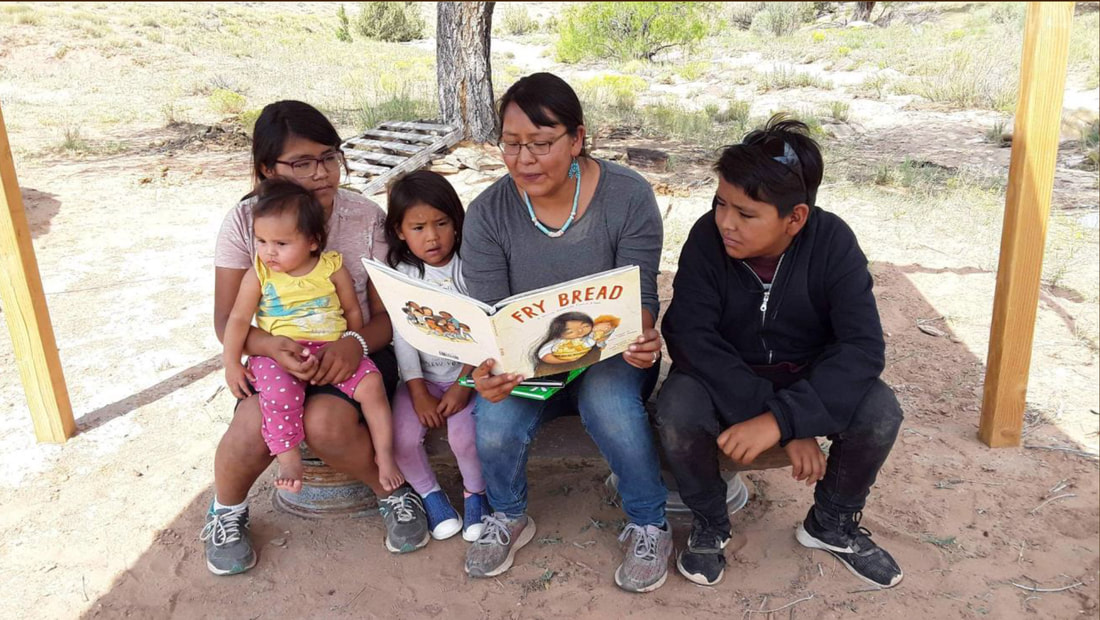

The Bookmobile has been funded and ordered but there have been many delays because of national microchip shortages for FORD! But we continue to move forward as we're anticipating the new van and CPH is now entering into our second phase of the project...
WE INVITE YOUR SCHOOL, BUSINESS, FAITH COMMUNITY OR ANY OTHER ORGANIZATION TO BECOME A BOOKMOBILE COMMUNITY PARTNER:
1. Community Partners adopt the R.E.A.D. in Beauty Bookmobile for a calendar month and help cover the monthly operational costs (approximately $5000).
2. Community Partners can also collect new or used books for the Bookmobile (optional).
3. Community Partners will be named on the actual Bookmobile and listed on our website, social media posts etc. for the year.
COMMUNITY PARTNERS ARE ESSENTIAL FOR KEEPING THE BOOKMOBILE PROJECT SUSTAINABLE. PLEASE CONSIDER JOINING OUR COMMUNITY PARTNERSHIP TEAM!
JANUARY: The University of Utah Pediatric Department
FEBRUARY:
MARCH:
APRIL: Rotary eClub of the State of Jefferson (D5110)
MAY:
JUNE: Flagstaff BOOKMANS Bookstore and Coffee Shop
JULY:
AUGUST: Chinle Unified School District
SEPTEMBER:
OCTOBER: Chinle IHS Hospital Alumni
NOVEMBER:
DECEMBER:
THANK YOU SO MUCH COMMUNITY PARTNERS!
1. Patricia, Miriyam, Sue and Paula in LA that have worked SO many hours on the Bookmobile proposal and details!!!
2. The Shurl and Kay Circi Foundation
3. Babbitt Ford in Flagstaff, AZ. - Thank you Mr. Alan Chan for helping us order and convert the Transit Van into a Bookmobile
4. Private Foundation in Phoenix, AZ that donated $40K in our initial stages. (Biggest Hugs Friends!)
5. ALL of our wonderful GoFundMe supporters over the past year during our start up campaign! Each and every gift made a difference.
6. SFNT Foundation
7. Desert Ford Foundation
8. Ford Operation Better World

Printed Christmas cards became popular in the Victorian period (1837-1901) thanks to a combination of cheaper printing techniques and even cheaper post, with the arrival of the Penny Black postage stamp. Coming in all shapes, sizes, and materials, Christmas cards were sent in their millions to all corners of the British Empire. Victorian illustrators created an entire mythology of exactly what we imagine a European Christmas should look like with their now-classic scenes of present-covered Christmas trees, holly, robins, sleighs, and snow-covered country lanes. When we dream of a white Christmas, it is the festive cards of the 19th century which are largely responsible for that evergreen imagery.

Origins
Adults have, of course, been writing letters to each other for centuries. Even before there was an official public post system, letters were delivered in person, by servants, and via transport coaches. There had also been prints made from the 15th century, using woodcuts or copperplate printing techniques, especially for calendars. It was, though, in the Victorian period that several factors conspired to make printed Christmas cards the hugely popular phenomenon they became.
The historians Antony and Peter Miall suggest in The Victorian Christmas Book that the origins of cards for the festive season lie in the classroom. From the 18th century, schoolmasters had their pupils work on a 'Christmas Piece' in the month of December. This work involved pupils selecting a sheet of fine paper and producing a sample of their writing, principally to show off to their parents evidence of their academic progress that year. The paper often came with a decorated engraved border, and by the 19th century, it was popular for the pupils to draw their own decorative borders using coloured ink. "These offerings were the forerunners of the great Victorian Christmas Card" (Miall, 37).
Other sources of inspiration for the decorative Christmas card may have been printed music sheets with decorative borders and covers, engravings commissioned to mark important anniversaries, school reward cards for hard-working pupils, fine illustrated notepaper, and the more ornate varieties of visiting cards which were left when one called upon someone and they were not at home.

The First Christmas Card
Sir Henry Cole (1808-1882) was a civil servant who had, in 1840, reformed the British postal system by helping to create the Universal Penny Post where senders used the now-famous Penny Black postage stamps. Cole would later become the first director of the Victoria and Albert Museum in London. In 1843, Cole had a brilliant idea. Not only could he save himself writing different individualised letters to his friends and family at Christmas but he could also brighten the season with a colourful card printed for the express purpose of sending his compliments of the season. Accordingly, Cole commissioned John Callcott Horsley (1817-1903), an artist and illustrator who was a member of the Royal Academy, to produce the first printed Christmas card.
Horsley's design for the card, which was about the size of an ordinary visiting card (2 x 3 inches or 5 x 7.5 cm), showed different generations of the Horsley family raising a toast – presumably to the absent friend who is the recipient of the card – while flanked with scenes showing acts of charity, then, as now, an important element of the Christmas season. On the left are people giving food to the needy, and on the right, they give clothing. There was a border of a wood frame intertwined with ivy, and below the main image a greeting of "A Merry Christmas and a Happy New Year to You". There was a space along the very top and bottom of the card left blank to write a short handwritten and personalised message to the receiver. One thousand such cards were printed and then hand-coloured. The cards went on sale to the public at the rather high price of one shilling per card. Perhaps unsurprisingly for a new and relatively expensive idea, there were few buyers.

The Idea Catches On
Fortunately for the future of Christmas cards, the royal family was enthusiastic for all things Christmassy. In particular, Prince Albert (1819-1861) brought German Christmas traditions to England such as the Christmas tree. It was, though, the younger members of the royal family who adopted the idea of sending each other handmade greeting cards both at Christmas and New Year. Queen Victoria must have approved since she later started the trend of public figures sending 'official' Christmas cards showing more often than not themselves and their family in a festive setting.
Then in 1844, there was another attempt at the commercial Christmas card, and this was much more successful. Mr W. C. T. Dobson sold a printed card which carried an illustration of the "Spirit of Christmas". In 1848, a card printed by William Maw Edgley (1826-1916) repeated the theme of Cole's card but added scenes of general merriment and holly to the imagery. Printers now knew they were onto a good thing, and they became more and more ambitious with the designs of their cards which were available to buy in stationers and bookshops. From 1879, rather than pricey single cards, people could buy cheap packs of cards from tobacconists and toy shops, often imported from Germany. This development went hand-in-hand with the new half-penny post for postcards, and so now people of all classes could send Christmas cards to their loved ones.

Victorian Christmas Card Designs
The first cards were printed on small single sheets of card, but they soon progressed to come in all shapes and sizes. Victorian Christmas cards were typically lithographed and hand-coloured before colour-printing took over. Many used embossed paper, sometimes with cut-out parts to resemble lace, particularly for borders. There were even cards decorated with ribbons, tassels, real lace, tinsel, and coloured glass. Satin, silk, and brocade were also popular materials to enhance the feel of the card. The most exotic of cards were scented, had padded additions, and incorporated pressed flowers. One card for sale boasted it was made of no fewer than 750 separate pieces. If one creation reflected the Victorian love of accumulating individual beautiful materials to create an even more beautiful finished article, it was the Christmas card. With so many possible materials being used in a single card, it is no wonder that draper's shops included them in their Christmas stock.
There was a great variety in the shape of cards, too, with the most popular ranging from the classic rectangular form to oval, circular, diamond, crescent, and bell-shaped cards. Some cards were folded, others made into fan shapes, or they reflected the object they illustrated such as a post box or purse. Cards might include moving parts or flaps that could be opened to reveal an additional scene or message. Some had tabs that, when pulled, moved the legs and arms of a character on the front of the card or they had a disk that could be turned to show different scenes in a central window.
There were all kinds of subjects depicted on cards, many of which included humorous cartoons and everyday life, sometimes not at all related to Christmas. Religious themes remained popular such as angels and scenes from the Nativity, but there was a definite shift away from these to more secular subjects as the Victorian era progressed. Victorian illustrators were not without humour or fear of the risqué, nor did they miss the opportunity to trick the viewer with many cards showing two scenes depending on which direction the card was held.

Victorian illustrators were largely responsible for what we today imagine as a classic 'Christmas scene': old churches and country lanes in the snow, sleigh rides, plump robins, glistening holly and mistletoe, and presents on or under the Christmas tree. The popular snow scenes on Victorian Christmas cards reflected the string of harsh winters in England through the 1830s and 1840s. White Christmases became much rarer thereafter, but the scene in people's imaginations was by then set. In the same way, the Christmas food we imagine being eaten by Dickensian characters in the 19th century is, like in the cards, always golden roast turkeys and great steaming Christmas puddings the size of cannon balls.
Father Christmas was a popular figure on cards, but he evolved over the decades, his appearance morphing from a Falstaffian character to a jolly old man with blue trousers and a crown of holly, and finally on to his definitive red suit with white fur trim. Father Christmas' mode of transport also evolved to keep up with the times, The Victorian Father Christmas used any means he could to reach people's chimneys such as the popular bicycle of the 1880s, the new motor car of the 1890s, the ever-growing modern railway network, or even a hot air balloon.

Christmas cards had become such a staple part of the season that they now attracted the top artists to illustrate them, names like Linnie Watts, who produced a series of cards showing children, and Harry Payne, who drew soldiers, a poignant theme for those with loved ones serving far from home in the armed forces of the British Empire.
Cards changed over time as tastes changed. For example, black backgrounds to make the main picture more striking were popular in the 1870s. Cards reflected modern trends in art, too. By the end of the century, art nouveau designs were appearing, with highly decorative designs and subjects inspired by the works of such fashionable artists as Alphonse Mucha (1860-1939). With cards being sent around the world, the tradition quickly took root in other countries, notably in the United States from 1874, with the cards printed by Louis Prang (1824-1909), popularly known as "the father of American Christmas cards".
Christmas Card Texts
On the front, inside or on the reverse of the card, the printed text also became more varied through the years, and below are some 19th-century examples:
Love and Peace with thee abide
Through the holy Christmastide!
Very happy may it be
Christmas time to thine and thee.
We live in deeds
in thoughts not breaths
not years
in feelings not in figures
on a dial.
May Christmas bring thee peace and plenty,
Barns and cellars never empty.
A horn of honest wholesome beer,
Will warm the heart, the spirits cheer.
May your Christmas happy be,
Fraught with every joy for thee;
And throughout each year in store,
Peace be with thee evermore.

Cards often came with longer printed texts such as poems or several verses of popular carols. An example of a typical verse within a Victorian Christmas card is:
Oh, Life is but a river;
And in our childhood, we
But a fair running streamlet
Adorn'd with flowers see.But as we grow more earnest,
The river grows more deep;
And where we laugh'd in childhood,
We, older, pause to weep.Each Christmas as it passes,
Some change to us doth bring;
Yet to our friends the closer,
As Time creeps on, we cling.(Miall, 43)
Collecting Christmas Cards
Beautifully made and capturing memories of the season, the Victorian middle classes became avid collectors of Christmas cards, which explains why it became common to have the year printed somewhere on the card. Perhaps the most famous card collector was George Buday – he even wrote a celebrated book on the history of Christmas cards, his The Story of the Christmas Card – and he donated his collection of over 3,000 cards to the Victoria and Albert Museum. This museum today has over 15,000 Christmas cards in its archives and each Christmas it reprints old Victorian designs so that they can, once more, just as in days of yore, carry people's Christmas wishes far and wide.
weekly@StateOfJeffersonRotary.org

How the World Learned to Manage the Flu
 What does it mean for a disease to be “endemic”?
It doesn’t mean the disease disappeared. When epidemiologists use the word “endemic,” they mean that a disease is occurring “at an expected level in a location during a period of time,” explains epidemiologist René Najera, editor of The History of Vaccines, an online resource by The College of Physicians of Philadelphia.
“Endemic” also doesn’t mean that a disease has ceased to be harmful. Malaria, tuberculosis and influenza are all serious and potentially fatal endemic diseases that occur every year. Since the 1940s, countries have built robust international health networks that identify flu strains in order to keep them under control, and avoid the kind of devastation that happened during the 1918 pandemic. This is something epidemiologists and virologists have argued is necessary for COVID-19, and will continue to be necessary if and when the virus becomes endemic.
Early Flu Detection Systems
In 1946, the United States established the Communicable Disease Center, or CDC, in Atlanta, Georgia. Now known as the Centers for Disease Control and Prevention, the CDC’s initial focus was preventing the spread of malaria. Two years later, the newly-formed United Nations—created as a result of World War II—established the World Health Organization, whose constitution asserts that “Governments have a responsibility for the health of their peoples.”
An early concern of the World Health Organization, or WHO, was the flu, says Wenqing Zhang, director of the WHO’s Global Influenza Program. The 1918 influenza pandemic had led to an estimated 50 million deaths worldwide. During World War II, the U.S. Army, remembering how the flu had devastated troops during World War I, began funding research into a flu vaccine. In the early 1940s, an Army-supported research team at the University of Michigan led by Thomas Francis Jr. and Jonas Salk (of the polio vaccine) developed the first viable flu vaccine. In 1945, flu vaccines became available for civilians.
In 1952, the WHO established the Global Influenza Surveillance and Response System in order to collect flu data from different countries and coordinate global efforts to combat the flu. This was a period in which the U.S. military—which was stationed all over the world—and other countries’ militaries were monitoring infectious disease outbreaks, and the WHO’s flu program attempted to use countries’ monitoring stations to look at the big picture. Within a few years, the CDC’s Influenza Division became a collaborating center with the WHO program.
Initially, the WHO’s flu program looked for signs and symptoms of influenza and apparent spikes in flu cases, Najera says. Finding the right vaccine to treat those cases was a more difficult matter. Bivalent flu shots could vaccinate against two strains of flu at a time, but discovering what type of flu strains were circulating, and what type of vaccine composition would best treat an outbreak, was still something scientists were learning to do. During the 1950s and ‘60s, they began to make some headway.
Identifying New Outbreaks
The first post-World War II flu pandemic occurred relatively early in the WHO’s flu program’s existence. Yet, according to Maurice Hilleman, the microbiologist who sounded the alarm about the outbreak, the WHO missed the pandemic’s early signs. In April 1957, Hilleman read about a flu outbreak in Hong Kong that had started a couple of months before in East Asia. After obtaining samples of the virus from a U.S. Army Medical General Laboratory in Zama, Japan, he realized that it was a new strain capable of turning into a pandemic.
Which is what it did. The 1957 pandemic killed an estimated 1.1 million people around the world, and very likely would’ve killed many more if not for Hilleman, who jump-started work on a vaccine that became available that year. Hilleman went on to develop more than 40 vaccines and receive the National Medal of Science for his contributions to public health.
When the next flu pandemic hit in 1968, the WHO’s flu surveillance program was more effective at detecting it. In July 1968, the National Influenza Center at the University of Hong Kong identified a flu strain that was spreading in the region. Scientists at the World Influenza Center in London and the CDC in Atlanta received samples of the virus. The scientists who analyzed it found that the virus, like the 1957 one, was a unique strain that could cause a pandemic. They relayed this information to the WHO, which in August issued a warning that a new flu pandemic was starting.
With this information and warning, vaccine-makers were able to develop vaccines specific to this virus strain. Like all pandemics, the 1968 one left a devastating toll, killing an estimated one million people. Still, the sharing of information globally led to the development of strain-specific vaccines that helped prevent infection and severe illness in many people.
Identifying the Right Vaccine for the World
During the 1970s and ‘80s, scientists started to gain a better understanding of the flu. They could see that different strains were prominent during different flu seasons, meaning that vaccines should specifically target the strains in circulation in order to be effective. In 1973, the WHO made its first formal recommendation for which strains new flu vaccines should target, Zhang says.
In 2007, an international resolution gave the WHO more authority to tell collaborating countries which flu vaccines they should distribute for that year based on circulating strains, and also what to do if the WHO detected a growing flu pandemic—things like increasing vaccine production, increasing testing, enforcing of travel restrictions, etc. (Zhang notes, however, that the WHO cannot force a country to use certain vaccines).
The H1N1 outbreak in 2009 “was the first test of these international health regulations,” Najera says. Although the virus killed an estimated 151,700 to 575,400 people, early detection and the relative availability of tests and vaccines helped prevent the pandemic from becoming worse. (In comparison, the WHO estimates there are 290,000 to 650,000 influenza-related respiratory deaths each year.) Ironically, many people who avoided the flu that year may not have realized how they benefited from global health systems doing their job.
“That is the issue with public health,” Najera says. “When things go right, nobody notices.”

Something to think about.
Ponderisms
- If money doesn't grow on trees then why do banks have branches?
- Since bread is square, then why is sandwich meat round?
- Why do you have to "put your two cents in"... but it's only a "penny for your thoughts"? Where's that extra penny going?
- Why does a round pizza come in a square box?
- How is it that we put man on the moon before we figured out it would be a good idea to put wheels on luggage?
- Why is it that people say they "slept like a baby" when babies wake up like every two hours?
- If a deaf person has to go to court, is it still called a hearing?
- Why do people pay to go up tall buildings and then put money in binoculars to look at things on the ground?
- Why do we choose from just two people for President and fifty for Miss America?
- If a 911 operator has a heart attack, whom does he/she call?
- Why is "bra" singular and "panties" plural?
- Do illiterate people get the full effect of Alphabet soup?
- Who was the first person to look at a cow and say, "I think I'll squeeze these dangly things here, and drink whatever comes out!"
- Why do toasters always have a setting that burns the toast to a horrible crisp, which no decent human being would eat?
- If the professor on Gilligan's Island can make a radio out of a coconut, why can't he fix a hole in a boat?
- If Wyle E. Coyote had enough money to buy all that ACME crap, why didn't he just buy dinner?
Have a very Merry Christmas and a happy and prosperous New Year!
You are not authorised to post comments.